Basement Servers and the Case Against Abstraction: Inside America's Self-Hosting Underground
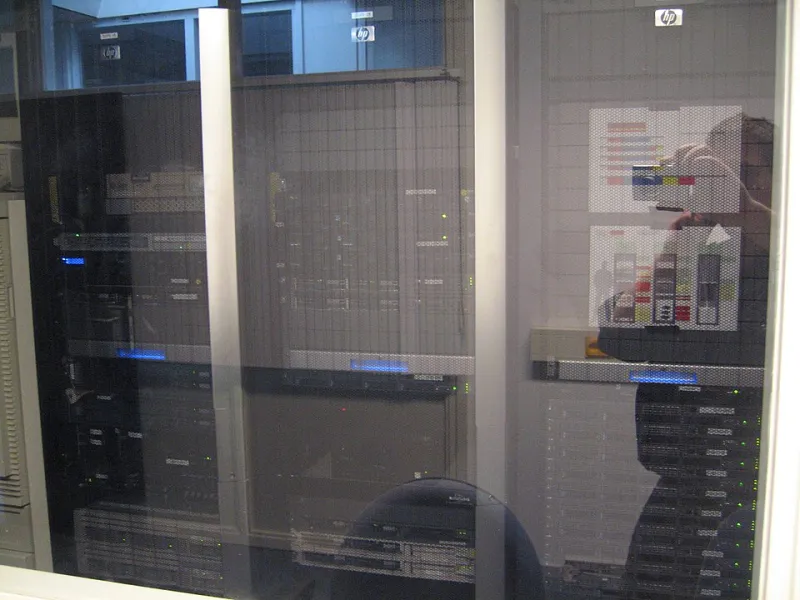
Photo: Jemimus, CC BY 2.0, via Wikimedia Commons
Somewhere in suburban Ohio, a Dell tower sits on plywood shelving next to a chest freezer, serving a personal analytics dashboard to a few hundred users. In a Colorado garage, a retired enterprise blade runs a family photo archive and a handful of side projects. These are not relics. They are deliberate choices made by engineers who could spin up a managed instance in ninety seconds and chose not to.
The self-hosting subculture never died after the cloud era began — it simply went quiet. And for an industry built on abstraction, its persistence is worth studying rather than dismissing.
The Bill That Never Surprises
Ask self-hosters why they bother, and cost predictability comes up first, not nostalgia. A used rack server bought for $800 plus $30 a month in electricity is a known quantity. It will never surprise anyone with a line item labeled "data transfer — inter-region" or a spike triggered by a misconfigured loop.
There is a lesson here for every hosting provider. Engineers do not merely object to cloud prices; they object to unforecastable prices. The developers we spoke with in preparing this piece described opening monthly invoices with the same wariness one brings to a hospital bill. When your bill is a probability distribution instead of a number, some portion of your users will eventually conclude that owning a noisy box in the basement is the cheaper path to peace of mind.
Providers who publish honest, flat, predictable pricing tiers are not competing with serverless on convenience — they are competing with the garage rack on trust.
Privacy as a Physical Act
The second motivation is less transactional. A surprising number of home-rack operators frame their choice in terms of custody: photos of their children, family email archives, home automation logs, and health records live on hardware they can touch. No provider ToS, no account suspension, no subpoena to a third party — just a drive in a room they control.
Whether or not every self-hoster's threat model justifies the effort, the underlying instinct deserves respect. American consumers and developers alike have grown more skeptical of where their data sleeps. Cloud providers who make data residency, encryption-at-rest defaults, and clear deletion guarantees legible — not buried in documentation but stated plainly — address the same concern that drives a developer to buy a UPS and a labeling machine.
The Tactile Curriculum
The third reason is educational, and it may be the most valuable to the industry. Running physical hardware teaches things abstraction hides: what a failing drive actually sounds like, how thermal throttling behaves in an Arizona summer, why RAID is not a backup, and how networking failures cascade in ways dashboards sanitize.
A generation of engineers has learned infrastructure exclusively through consoles and YAML. That is not a criticism — managed services are a genuine triumph. But the self-hosters we encountered consistently described their garage racks as training grounds that made them better cloud architects. They understand what the abstraction is abstracting.
Employers notice. The résumé that says "built and maintained a homelab through two hardware failures and a Comcast outage" signals debugging instincts that no certification fully captures. For an industry worried about the depth of its talent pipeline, the basement rack is an unofficial apprenticeship program.
Distrust, Earned and Unearned
Not every motivation is flattering. Some self-hosting is rooted in distrust that abstraction has earned — surprise deprecations, forced migrations, regional outages rippling across supposedly independent services. Some is rooted in distrust it has not: a romantic belief that self-reliance is inherently safer, when in practice an unpatched home server behind a consumer router is often far more exposed than a hardened managed platform.
Honest providers should acknowledge both. The industry's credibility problems are real enough to document without exaggeration, and the self-hoster's overconfidence is real enough to gently correct. The productive response to distrust is not marketing; it is transparency about failure modes, maintenance windows, and what happens when things go wrong at 3 a.m.
What the Rack Teaches the Cloud
The self-hosting underground will never be a mass market, and it does not need to be. Its value is diagnostic. It tells us that engineers crave:
- Predictable economics over elegant usage graphs
- Custody and clarity over opaque data handling
- Deep understanding over pure abstraction
- Honesty about failure over uptime theater
Managed platforms that internalize these lessons get the best of both worlds: the convenience of the cloud with the trust of the machine room. The rest will keep losing a quiet, technically fluent minority to plywood shelving and secondhand servers — one garage at a time.
The rack hums on. The industry should be listening.