Before You Click Deploy: A Founder's Worksheet for Choosing the Right Cloud Region
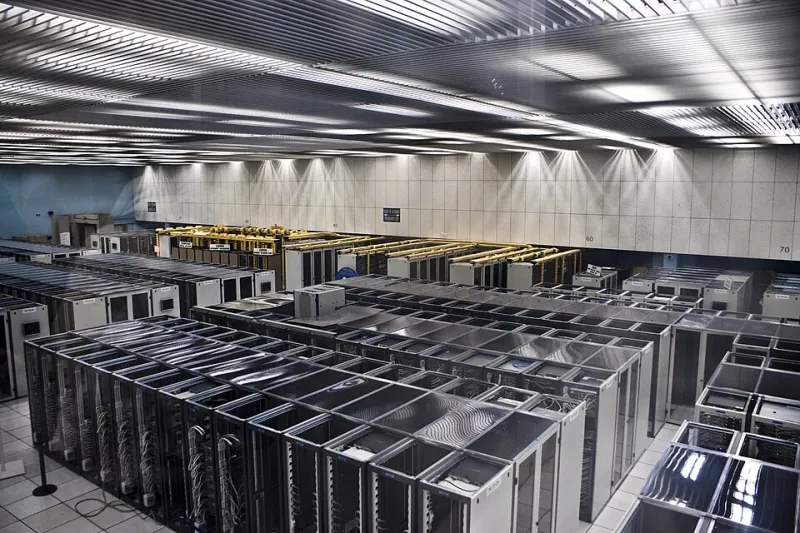
Photo: Florian Hirzinger - www.fh-ap.com, CC BY-SA 3.0, via Wikimedia Commons
Every infrastructure decision looks trivial until the invoice arrives or the customers complain. Region selection sits squarely in that category: a checkbox during setup that quietly shapes latency, cost, and compliance for years. For founders and platform teams serving a national audience, the question is rarely "which region is fastest?" It's "which region is fastest for the customers who matter most — and what does that choice cost?"
Start With Where Your Revenue Lives, Not Where Your Office Sits
The most common mistake in region selection is anchoring on geography you can see. Your team may be headquartered in Austin, but if 60% of paying customers cluster in the Northeast corridor or the Pacific Northwest, your office ZIP code is irrelevant. Pull your analytics — not just page views, but conversion events — and map them against US census regions.
A useful rule of thumb: latency above roughly 100ms round-trip becomes perceptible in interactive applications. From AWS's us-east-1 in Northern Virginia, you can generally serve the entire Eastern Seaboard comfortably, with acceptable performance into the Midwest. From us-west-2 in Oregon, the math flips. If your product is a SaaS dashboard with frequent API calls, that difference compounds across every session.
The Three Workload Archetypes
Different applications weight the decision differently. Consider three common patterns:
E-commerce storefronts. Conversion rates degrade measurably with every added second of page load. If your traffic skews toward one coast during business hours, host there. But note that e-commerce also touches payment processors and tax engines whose endpoints may themselves be region-anchored — measure the full request chain, not just your own servers.
SaaS dashboards and internal tools. These tend toward chatty, request-heavy sessions from professional users on corporate networks. Latency sensitivity is high, but the user base is often concentrated in major metro areas on both coasts. This is where the case for a second region — or a CDN-fronted read layer — becomes strongest.
Media and content sites. Static-heavy workloads forgive regional distance when a content delivery network is in front of them. Here, the origin region matters mostly for publishing workflows and dynamic personalization, which means you can optimize for cost rather than proximity.
Data Residency: The Constraint That Isn't Going Away
US-based companies sometimes assume residency rules don't apply domestically. That's increasingly untrue. Healthcare workloads under HIPAA, education platforms handling student records under FERPA, and government-adjacent contracts under FedRAMP all carry infrastructure requirements that can eliminate entire regions from consideration. Some states are also drafting their own data-handling statutes, and certain enterprise customers now write region-locking clauses into procurement contracts.
Before you score anything, strike off any region that fails a hard compliance requirement. No latency advantage rescues you from a contractual violation.
The Price Gap Between Regions
Compute and storage are not priced identically across US regions. The difference is rarely dramatic — often in the single-digit percentage range — but at scale it compounds. Egress pricing, in particular, varies by region and interacts with where your customers sit. A cheap region that adds cross-AZ or inter-region transfer costs can quietly erase its own discount.
Run your actual workload shape — instance mix, storage tier, and monthly egress estimate — through the pricing calculator for your two or three finalist regions. Model twelve months, including expected growth, not just the current bill.
The Scoring Worksheet
Apply the following to each finalist region. Weight each criterion 1–5 based on your workload archetype, then score each region 1–10.
| Criterion | Weight (example) | What to Measure |
|---|---|---|
| Customer proximity | 5 | Median round-trip latency to your top three customer metros |
| Compliance fit | 5 | Binary pass/fail; disqualifying if it fails |
| Twelve-month total cost | 4 | Compute + storage + egress, modeled at projected scale |
| Service availability | 3 | Are all managed services you rely on offered in-region? |
| Disaster recovery posture | 3 | Distance to your failover region; correlated-failure risk |
| Talent and ecosystem | 2 | Community, managed service maturity, hiring pool overlap |
Multiply, sum, and compare. The exercise rarely produces a surprise winner — but it reliably produces defensible winners, which matters when a board member or a diligence process asks why you chose Northern Virginia over Oregon.
When the Answer Is Two Regions
For a growing subset of companies, the honest conclusion is that one region cannot serve a national audience well. Before expanding, though, exhaust the cheaper levers: aggressive CDN caching, edge-side session handling, and database read replicas closer to secondary user clusters. A second full region doubles operational surface area — deployments, monitoring, failover testing — and should be justified by revenue, not vanity.
The Bottom Line
Region selection is one of the few infrastructure decisions that is expensive to reverse and cheap to deliberate. Spend the afternoon with a spreadsheet and your analytics dashboard before you spend the next three years living with the answer. Your customers — scattered across every time zone — will feel the difference, even if they never know why.