What Your Architecture Diagram Says Before You Say a Word
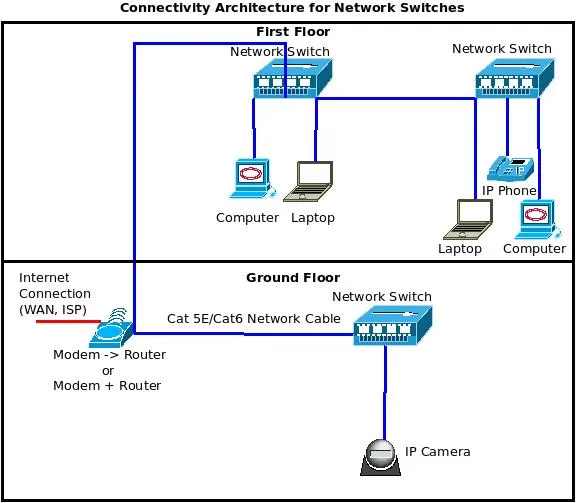
Photo: Destination8infinity, CC BY-SA 4.0, via Wikimedia Commons
Every company has a slide deck it's proud of. Fewer have an infrastructure they can say the same about. Yet when a prospective customer, integration partner, or senior engineer evaluates your business, the slide deck is often the second thing they look at. The first is whatever your systems quietly reveal: a status page, a public architecture post, a staging environment they stumbled into, or the way your application behaves under load during a demo.
Infrastructure communicates. The only question is whether it's communicating on purpose.
The Diagram on the Sales Call
Consider a common scene in American B2B software: a mid-market buyer asks your sales engineer, "So how do you handle failover?" The answer that follows — confident or hedged, diagrammed or improvised — tells that buyer more about your engineering maturity than any testimonial. A clean, current architecture diagram signals discipline. A hand-waved answer signals that the diagram either doesn't exist or wouldn't survive scrutiny.
This isn't about over-engineering. A two-person startup running a well-documented setup on a reputable cloud provider often reads as more trustworthy than a forty-person company with an undocumented sprawl of orphaned resources. Buyers aren't grading scale. They're grading intentionality.
Three Audiences Reading Your Stack
Prospects and partners. Enterprise buyers in the US increasingly include infrastructure review in vendor assessments, especially in regulated sectors like healthcare and fintech. They look for region redundancy, sensible data residency, and evidence that someone thought about failure modes. A stack that answers these questions before they're asked shortens sales cycles.
Future hires. Senior engineers interview you right back. A public engineering blog, a tidy repository structure, a status page with honest postmortems — these are the equivalent of a well-kept storefront. Candidates who see a deliberate architecture assume deliberate management. Candidates who see chaos assume chaos, and they're usually right.
Acquirers and investors. Diligence teams read infrastructure the way an appraiser reads a house. Load balancers with health checks, consistent naming, documented recovery procedures — these raise valuations. A single production server named "do-not-touch" does the opposite.
Naming Is Branding
It sounds trivial, but naming conventions are the cheapest signal available. prod-us-east-api-01 tells a reader region, environment, and function in half a second. server2-final-NEW tells them something else entirely.
The same applies to tags, alerts, and dashboards. An on-call rotation with actionable alerts reads as a company that respects its engineers. A dashboard of grey graphs nobody checks reads as a company that finds out about outages from customers on Twitter.
The Self-Audit Checklist
Run your infrastructure through these questions honestly:
- Could a new engineer find the current architecture diagram in under five minutes? If not, one doesn't exist in any meaningful sense.
- Does your status page history show honest incident reporting, or a suspiciously perfect uptime record that no one believes?
- Are your naming conventions consistent across environments, or do they degrade the further you get from production?
- Can you explain your failover story in one sentence without qualifying it with "well, normally"?
- Would a screenshot of your monitoring dashboard reassure or alarm a technically literate prospect?
- When did you last delete something? Stacks that never shed resources are usually stacks that never review them.
Dressing the Part, Without the Costume
None of this argues for cosmetic polish over substance. A beautiful diagram of a fragile system is worse than an honest one — it's a liability with good lighting. The goal is alignment: make the infrastructure you actually run legible to the people who matter, and fix the parts you'd be embarrassed to diagram.
Start small. Redraw the architecture diagram this quarter and circulate it internally. Rename the worst-named resource. Write the one-paragraph failover story. These are hours of work, not weeks, and they compound: every sales call, interview, and diligence session that follows will start from a stronger position.
Your infrastructure is already giving an elevator pitch behind your back. The only decision left is whether you've written it.