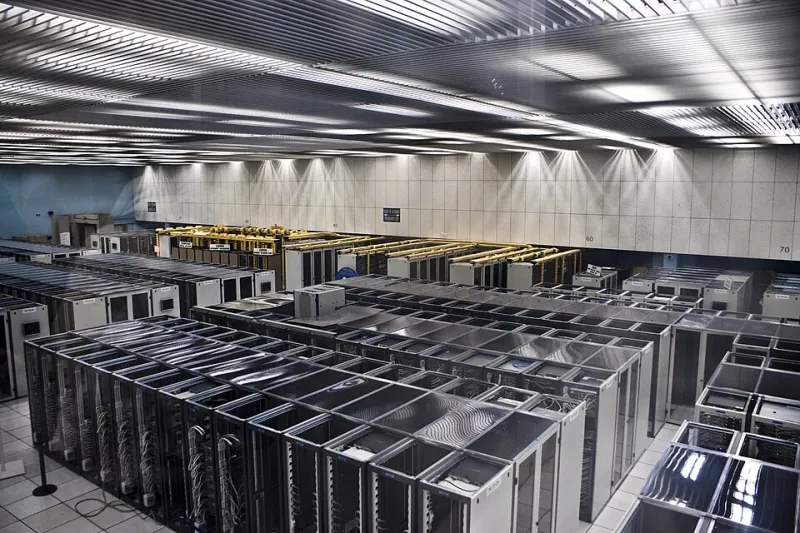
The Just-in-Case Cluster: Breaking the Habit of Provisioning for a Future That Never Arrives

Photo: empty modern commercial kitchen stainless steel equipment, via img.freepik.com
Every engineering team has one. Not the production cluster, and not the staging environment anyone remembers to use — but the other thing. The Kubernetes cluster someone provisioned in March for a proof of concept, the three managed nodes attached to it, the load balancer quietly holding a static IP, and the object storage buckets accumulating whatever the last intern uploaded. Nobody uses it. Nobody has deleted it. And every month, the invoice arrives with a line item that has long since stopped meaning anything.
In the restaurant business, there's a rule: food prepared and never ordered is waste. In cloud infrastructure, we've somehow convinced ourselves it's prudence.
The Psychology of the Spare Room
Over-provisioning isn't a technical failure; it's an emotional one. Engineers are trained to anticipate failure and rewarded for avoiding outages, but almost never penalized for unused capacity. The asymmetry is obvious once you name it: deleting a cluster you later need costs you an afternoon. Keeping a cluster you never need costs you money — but money that appears on someone else's spreadsheet.
We spoke with engineers across a range of US companies, from a twelve-person SaaS shop in Denver to a mid-market logistics platform in Atlanta, and the same confessions surfaced again and again.
"We spun up a cluster for a customer demo that never shipped," one platform engineer told us. "Tearing it down felt like admitting the project was dead. So it just... stayed. Eight hundred bucks a month for a monument to a feature we abandoned."
Another engineer, at a fintech startup in Austin, put it more bluntly: "Provisioning is one click. De-provisioning is a meeting. Guess which one wins at a company where everyone's heads-down on roadmap?"
That friction is the whole story. Spin-up is celebrated — there's a dashboard, a Slack message, a little endorphin hit. Tear-down requires someone to argue that a resource is worthless, and nobody wants to be the person who deleted the wrong thing before a quarterly review.
Why 'We Might Need It' Is a Budget Line, Not a Strategy
The defense always sounds reasonable. Rebuilding a cluster takes hours. Autoscaling configurations took days to tune. What if traffic doubles next quarter?
But run the math the other way. A modest three-node managed cluster with attached storage and networking might run $600–$1,200 per month depending on your provider and region. Over a year, that's a mid-level engineer's conference budget, a contract engagement, or real runway. Multiply across a few orphaned environments and you're funding a shadow infrastructure nobody can justify in a planning meeting.
There's also a subtler cost: operational surface area. Every running cluster is a thing that can misbehave, a thing that needs patching, a thing that shows up in security reviews as an unexplained asset. During diligence or a SOC 2 audit, "we forgot about it" is not a satisfying answer to "why does this environment exist?"
The Quarterly Pantry Clean-Out
The fix isn't a policy memo — it's a recurring ritual. Borrowing from the restaurant world's inventory discipline, we recommend a quarterly infrastructure clean-out. One afternoon, once a quarter. Here's the checklist our sources wished they had:
- Export every resource with a creation date. Most cloud consoles let you filter by age. Anything older than two quarters gets a look.
- Tag or die. Every resource needs an owner and a purpose tag. Untagged resources are the expired cans at the back of the pantry — pull them forward and decide.
- Check actual utilization, not peak memory. A cluster idling at 8% CPU for ninety days is not "keeping warm." It's a sunk cost with a heartbeat.
- Snapshot, then destroy. Export configurations (your Terraform or Helm files already have most of it) and cold-store any data. If you truly need it again, you can rebuild in hours — and you'll rebuild it better.
- Celebrate the deletion. Post the savings in your team channel. Make tear-down as visible as deployment. Culture follows applause.
One team we spoke with in Chicago ran their first clean-out expecting to reclaim a few hundred dollars. They found $2,300 in monthly spend attached to environments no one could explain — including a second load balancer that had been routing nothing since the previous fall.
Scale Discipline as a Feature, Not a Chore
There's a reason the best infrastructure teams treat de-provisioning with the same rigor as deployment: capacity on demand is the entire promise of the cloud. You pay a small premium for elasticity so you never have to hoard hardware. Keeping idle clusters running inverts that bargain — you've taken on the costs of ownership while forfeiting the benefit.
If your ambition is global — multi-region, edge-aware, ready for the next hundred thousand users — the path there runs through leaner infrastructure today, not fatter. The resources you don't run are the ones that scale perfectly.
So open the console. Look for the cluster nobody ordered. And this quarter, finally send it back to the kitchen.