Forecasting the Forecast: How to Read a Cloud Status Page Before the Storm Hits

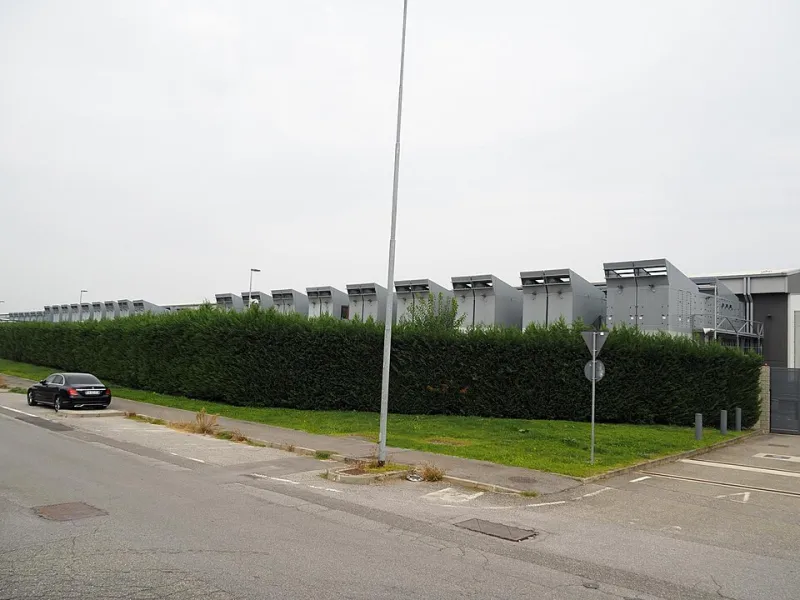
Photo: David Zhang, CC BY-SA 2.0, via Wikimedia Commons
Every American business that runs on the internet has, at some point, stared at a status page during an outage. The page says "Investigating." Ten minutes later it says "Identified." Twenty minutes after that: "Monitoring." And somewhere in that stretch of vague vocabulary, your checkout flow is bleeding revenue while your customers refresh their browsers in Cleveland and Chicago.
A status page is a forecast, not a report. Meteorologists never tell you it is currently raining when you can look out the window — they tell you what is coming. Learning to read cloud status updates the same way, spotting the pressure systems before the front arrives, is one of the most underrated operational skills a technical team can build.
The Vocabulary of Vagueness
Start with the language itself. Status pages are written by communications teams with legal review in the loop, which means every word is chosen to minimize liability while conveying just enough information. That produces predictable patterns worth decoding.
- "Investigating" means the on-call engineer has been paged but has not yet confirmed root cause. The clock is genuinely uncertain here.
- "Identified" often means they know what broke, not that they know how long the fix takes. A misconfigured load balancer and a failed fiber cut both get this label.
- "Monitoring" is the most frequently misread term. It means a fix has been applied and seems to work — but it also means the fix is unproven under full production load. Relapses happen here.
- "Resolved" is a legal conclusion, not an engineering one. Read it as "we believe we are done," not "the root cause is understood."
Timing tells you as much as the words. An incident that sits in "Investigating" for forty minutes is a different animal from one that moves to "Identified" in four. Long investigation phases usually indicate the failure is in a layer the provider's own dashboards cannot see — a backbone provider, a DNS dependency, a third-party authentication service. Those outages resolve on someone else's schedule, not your provider's.
Watch the Gaps, Not the Announcements
Here is the pattern most teams miss: what a status page omits is more informative than what it includes. If a provider posts an incident affecting "a subset of customers in us-east-1" but your monitoring shows failures in us-west-2, the blast radius is bigger than the page admits — either because the provider has not finished scoping it, or because the update template does not map cleanly to what is actually failing.
Similarly, note the cadence. A provider that updates every fifteen minutes during an incident is running a disciplined incident command process. A provider that goes silent for two hours and then posts "Resolved" with no explanation is telling you something about how your future incidents will be handled.
Build Your Own Doppler Radar
Relying solely on a provider's status page is like relying on the airport's weather report while your flight is boarding. You need independent instrumentation.
A practical early-warning stack has three layers:
- Synthetic monitoring from multiple regions. Run lightweight uptime checks against your own endpoints from at least three geographically distributed points — one on the East Coast, one on the West Coast, one outside the US. When your checks fail before the status page updates, you have gained minutes that translate directly into faster incident response.
- Provider-independent health signals. Watch error rates, p99 latency, and connection pool saturation on your side of the fence. Many degradations never rise to the level of a status page incident — the provider considers a 20% latency increase "within normal operating parameters." Your users disagree.
- Community channels. Twitter/X, Reddit threads, and Discord communities often surface regional outages before official channels. A search for your provider's name filtered to the last hour is a surprisingly effective diagnostic step at 2 a.m.
Wire these signals into the same alerting pipeline as your application monitors. The goal is simple: your team should never learn about an infrastructure problem from a customer.
Post-Mortems Are the Real Product Review
If you are evaluating cloud providers — or deciding whether to stay with one — skip the marketing site and read the post-mortems. A provider's incident reviews reveal more about engineering culture than any benchmark or SLA percentage.
Strong post-mortems share a recognizable anatomy. They state a clear timeline with timestamps, not rounded approximations. They name the root cause specifically — "a stale configuration pushed during a routine deploy" — rather than hiding behind "a technical issue." They include detection time versus resolution time, which tells you how long customers were affected before anyone noticed. And critically, they list concrete remediation items with owners, not a vague promise to "improve monitoring."
Weak post-mortems are equally recognizable. Excessive redaction, root causes described in passive voice ("it was determined that..."), and remediation sections that read like press releases all suggest an organization optimizing for narrative over learning.
For a US-based business, this matters doubly when uptime commitments feed into customer contracts or cyber insurance questionnaires. An insurer's underwriter and an enterprise buyer's due diligence team will both ask how your providers communicate during failures. Being able to point to a track record of transparent, specific post-mortems is a stronger answer than any uptime decimal.
The Forecast Is Yours to Write
No cloud provider — GlobalWeb Cloud included — is immune to bad weather. Networks fail, deploys go sideways, and upstream dependencies break. The difference between a bad afternoon and a business-impacting crisis is rarely the outage itself; it is how early you saw it coming and how honestly it was explained afterward.
Treat status pages as inputs, not oracles. Instrument independently. Read the incident history the way you would read a weather service's archive before buying a house in Tornado Alley. The teams that weather infrastructure storms best are not the ones with the luckiest providers — they are the ones who learned to read the radar.